
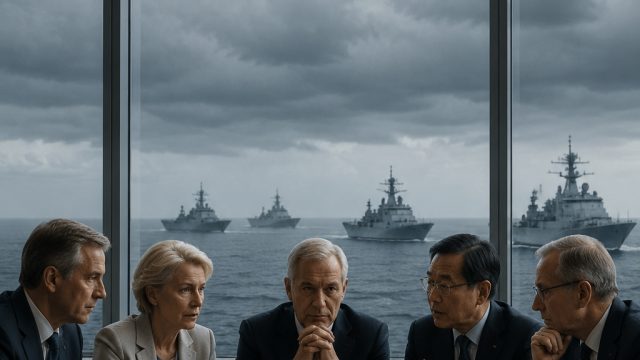
In a significant escalation of international concern, the United States, United Kingdom, France, and Germany have issued a joint statement expressing alarm regarding China's increasing naval activities near Taiwan. This development reflects not just the geopolitical stakes involved but also the potential implications for global security and trade routes, making it a crucial issue to monitor in the current geopolitical climate.
The Context of Chinese Naval Activities
The waters surrounding Taiwan have long been a focal point of tension between superpowers, primarily due to China's assertiveness in the region. Recent reports indicate a marked increase in Chinese patrols, raising eyebrows among Western democracies. These patrols are perceived as a move to extend China's influence and assert territorial claims, which has been met with stern rebukes from global leaders.
Rising Naval Power: The Chinese Strategy
China's naval strategy appears to be centered around its aspirations to project power. Analysts suggest that as China continues to develop its naval capabilities, including the recent commissioning of advanced aircraft carriers, its presence in contested waters likely aims to challenge international norms.
- Increased Patrols: Reports indicate that Chinese vessels have been operating closer to Taiwan’s territorial waters.
- Aircraft Carrier Operations: The launch of new Chinese aircraft carriers enhances their operational reach.
- International Response: The U.S. has reaffirmed its commitment to Taiwan, which could lead to heightened military readiness.
Implications for Global Trade Routes
With Taiwan being a key hub for global trade, particularly in technology and semiconductors, disruptions in this region could have far-reaching consequences. The Taiwan Strait is one of the busiest shipping lanes in the world, making the stability of this area critical for international commerce.
The Economic Stakes
The economic ramifications of increased tensions are profound, impacting everything from supply chains to energy prices. A blockade or military confrontation in the Taiwan Strait could disrupt the flow of goods and result in significant economic fallout worldwide.
- Supply Chain Disruptions: Key industries, especially tech, could face severe delays.
- Increased Costs: Potential military conflicts may lead to higher shipping and insurance costs.
- Investor Confidence: Heightened tensions may deter foreign investment in the region.
The Role of International Diplomacy
As tensions escalate, the importance of diplomacy cannot be understated. The joint statement by the U.S., UK, France, and Germany signals a united front against unilateral changes to the status quo in the Taiwan Strait. This collaborative approach underscores the need for a coordinated response to maintain stability and prevent conflict.
Potential Diplomatic Solutions
Continued dialogue and multilateral engagements will be vital in addressing these tensions. The global powers are likely to pursue various strategies to de-escalate the situation:
- Increased Engagement: Regular talks and forums to address grievances.
- Military Preparedness: Strengthening alliances in the region to deter aggression.
- Economic Sanctions: Discussing the possibility of targeted sanctions against aggressive actions.
Conclusion: A Pivotal Moment for Global Security
The current situation near Taiwan represents a pivotal moment in international relations. With escalating military activities and heightened global scrutiny, the actions taken by China and the responses from global powers will likely shape the future of not only the region but also international stability as a whole. As we navigate these complex dynamics, the emphasis on diplomacy and cooperation remains critical in averting potential conflict.
