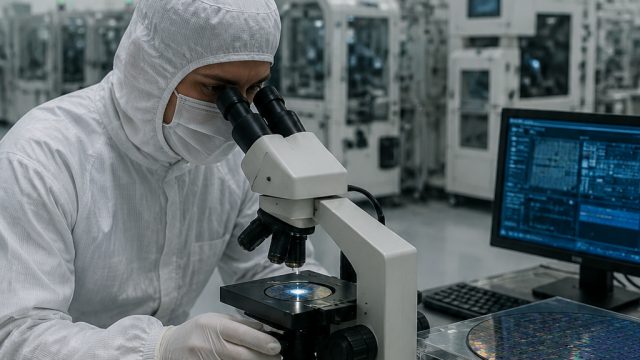
In a rapidly evolving technological landscape, Europe is now taking significant steps to assert its independence amid increasing pressures from Washington's semiconductor policies. As tensions rise between the U.S. and nations like China over chip production capabilities, European leaders are focusing on developing their own strategic pathways. This proactive stance is critical now more than ever, given the escalating competition within the global tech sector.
The Current State of the Semiconductor Industry
The semiconductor industry has been a focal point of international competition, with the U.S. implementing strict export controls aimed at limiting China's access to advanced chip-making technology. These restrictions have raised concerns about potential supply chain disruptions and technological stagnation across various regions, particularly in Europe, which relies heavily on both U.S. technology and Chinese manufacturing capabilities.
Understanding the U.S. Chip Restrictions
The latest measures introduced by the U.S. government, including the MATCH Act, spell out extensive limitations on the types of chip-making equipment that can be sold to foreign countries. CEO of ASML, a leading Dutch semiconductor equipment manufacturer, Christophe Fouquet, highlighted that the focus is now on older-generation deep ultraviolet tools that have been in use for over a decade. Such restrictions pose a threat not only to China’s ambitions but also to the global semiconductor supply chain.
Europe’s Push for Technological Sovereignty
Europe is increasingly aware that relying on U.S. technology could lead to vulnerabilities. As a response, European nations are investing in local semiconductor manufacturing to reduce dependency. The European Union has set ambitious goals to achieve technological sovereignty, aiming to produce 20% of the world’s chips by 2030. This push can have vast implications on the global market, reshaping supply chains and alliances.
- Investment in local semiconductor foundries
- Support for research and development in advanced technologies
- Collaboration with private sector players for innovation
The Role of Innovation in Europe’s Strategy
Innovation is a cornerstone of Europe's strategy to combat the effects of U.S. semiconductor policies. By fostering a robust ecosystem for research and development, Europe aims to create cutting-edge technologies that can compete on a global scale. This includes collaboration between governments, academic institutions, and industry leaders to drive advancements in chip design and manufacturing processes.
Partnerships and Collaborations
European countries are actively forming partnerships to strengthen their technological capabilities. For instance, initiatives like the European Chips Act are designed to incentivize investments in semiconductor manufacturing and facilitate knowledge sharing among member states. Such collaborations not only enhance production capacities but also boost the overall competence in high-tech industries.
The Future of Global Semiconductor Supply Chains
As Europe charts its course in the semiconductor landscape, it must navigate the complexities of existing global supply chains. The ongoing chip war initiated by the U.S. underscores the need for a diversified supply chain that does not rely on any single geopolitical entity. Europe’s advancements could lead to new dynamics in the market, compelling countries to rethink their strategies regarding technology exports and imports.
Strategic Partnerships with Non-Western Countries
Europe is also exploring potential partnerships with non-Western countries to enhance its semiconductor capabilities. Collaborating with nations that have robust technology sectors, such as Japan and South Korea, could provide valuable insights and resources. Such moves could mitigate risks associated with the U.S.-China tensions, fostering a more balanced global semiconductor ecosystem.
Conclusion: What Lies Ahead for Europe and the Semiconductor Industry
The semiconductor war initiated by U.S. policies is forcing Europe to rethink its technological dependency and take proactive measures to secure its position in the global market. As Europe pushes for greater autonomy in semiconductor production, the outcomes will likely reshape industries beyond technology, influencing everything from automotive manufacturing to consumer electronics.
With increased investment, innovation, and strategic partnerships, Europe stands at a crucial junction. The decisions made today will not only impact its technological future but also redefine its role in the global economy. As developments continue to unfold, staying informed on these matters is essential for businesses and individuals alike.